
Before discussing land, soil, approvals, and technical services, it is important to understand what architecture is, why it matters, and how different planning philosophies influence a project.
1.1 What Is Architecture?
- Architecture is the art, science, and planning process of designing buildings and spaces in a way that makes them functional, safe, comfortable, and visually meaningful.
- Architecture is not only about how a building looks — it is also about how spaces are arranged and how people move through them.
- It considers how natural light and ventilation work, how comfortable the building feels, and how the design responds to the site.
- Architecture ensures the project supports the client's needs at every level.
- In simple words, architecture turns an idea into a properly planned space that can be built and used successfully.
1.2 Why Architecture Is Important
- Architecture is important because it affects how well a building works in real life.
- Without proper architecture, a project may face poor room arrangement, weak ventilation, bad circulation, and poor sunlight distribution.
- It may also result in inefficient use of space, unattractive proportions, and costly changes later.
- Good architecture improves functionality, comfort, visual quality, and planning clarity.
- It ensures better coordination with engineering and delivers long-term project value.
1.3 A Simple History of Architecture
- Architecture has existed since human beings first started creating shelters — evolving from basic protection into a complete design discipline.
- It developed through early shelters made from local materials, then ancient civilizations such as Egyptian, Greek, Roman, Persian, Indian, and Chinese traditions.
- Traditional and regional architecture was based on climate and culture.
- Modern architecture introduced steel, concrete, and glass.
- Contemporary architecture now uses digital design, sustainability, and user-focused planning.
1.4 Main Types of Architecture
- Residential Architecture — for homes, villas, apartments, and private residences.
- Commercial Architecture — for offices, retail spaces, and business facilities.
- Institutional Architecture — for hospitals, schools, and public buildings.
- Industrial Architecture — for factories, warehouses, and manufacturing facilities.
- Interior Architecture / Interior Design — for interior spaces and layouts.
- Landscape / Site Planning — for outdoor environments and site development.
- Each type has a different purpose, but all require thoughtful planning and coordination.
1.5 Modern, Traditional, and Asian Architectural Approaches
- Architecture can be understood through different design approaches.
- Modern Architecture usually focuses on: clean lines, simple forms, open spaces, practical layouts, and minimal ornament.
- Traditional Architecture often reflects: local climate, regional materials, cultural identity, craftsmanship, and traditional detailing.
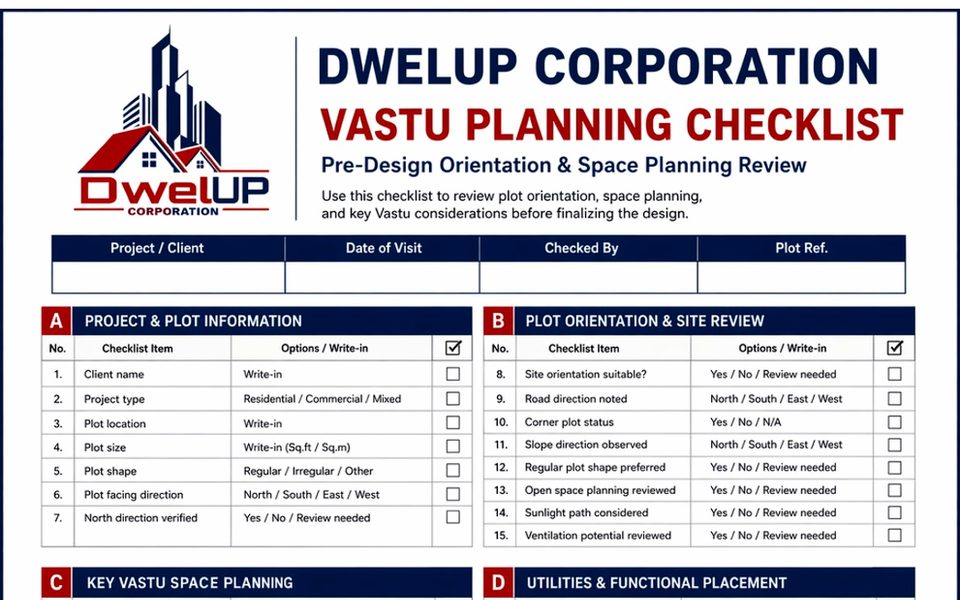
- Asian Architectural Approaches may include: Vastu Shastra, Feng Shui, direction-based planning, symbolic plot interpretation, and culturally guided spatial organization.
1.6 What Is Vastu Shastra?
- Vastu Shastra is a traditional Indian system of architecture and directional planning.
- It focuses on how the building, directions, and spaces relate to each other.
- Vastu may influence plot selection, entrance direction, room placement, zoning, and building orientation.
1.7 What Is Feng Shui?
- Feng Shui is a traditional Chinese planning philosophy that focuses on balance, flow, direction, and the relationship between people and their environment.
- Like Vastu, it is used by some clients who want spaces that feel balanced, intentional, and harmonious.
1.8 Gaumukh and Shermukh Plots
- Gaumukh (Cow Face Plot): a plot that is narrower at the front and wider at the back — often considered more suitable for residential use in traditional interpretation.
- Shermukh (Lion Face Plot): a plot that is wider at the front and narrower at the back — sometimes considered more suitable for commercial use.
- Important: these are traditional references only. Real suitability must still be checked through dimensions, usability, access, legal status, direction, design compatibility, and engineering feasibility.